What is Tesla solar panel installation?
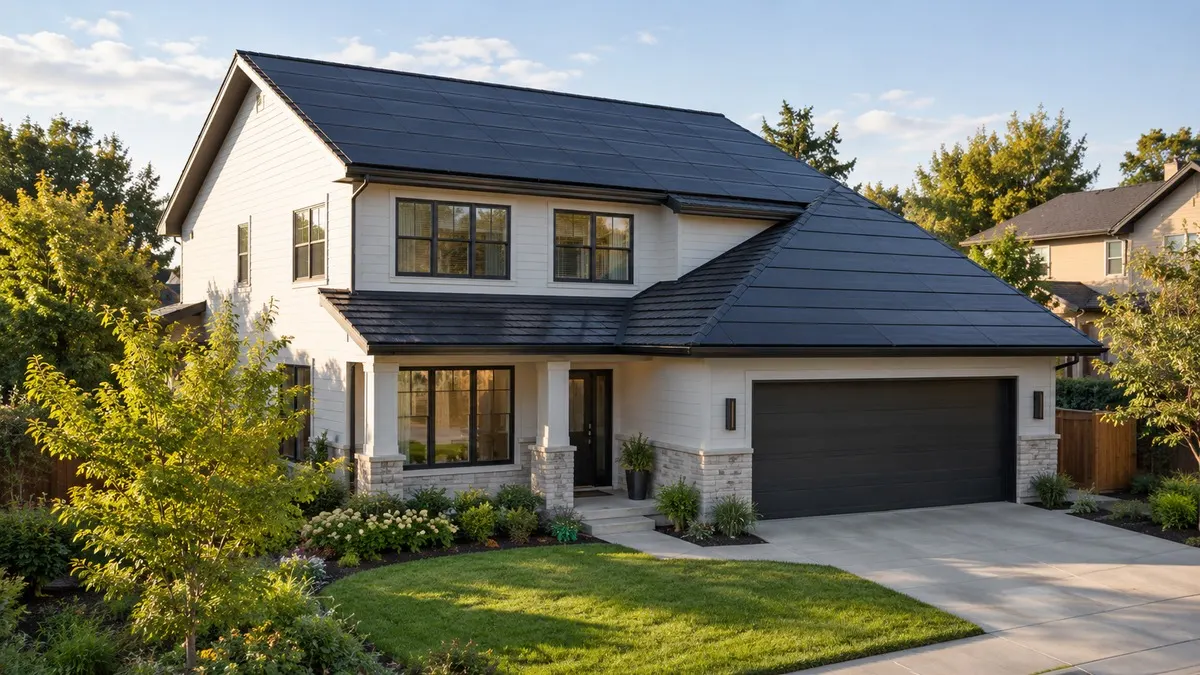
Tesla sells home solar systems directly, mostly online, and also through independent installers it certifies. A Tesla system typically combines all-black panels on low-profile racking with a Tesla inverter or, since the Powerwall 3, a battery with a built-in solar inverter. Panels, battery and home usage all show up in the same Tesla app.
The appeal is simplicity: standardized system sizes, a price quoted upfront online, and a single company for the equipment. The trade-offs are less design flexibility, less choice of equipment and, depending on the area, slower service than a local installer.
Tesla in the public installation records
Tesla is one of the largest home solar installers in the country. Public installation records for 2023–2025 (Tracking the Sun, Lawrence Berkeley National Laboratory) include 34,571 home systems installed by Tesla in the 12 states that report installer names.
| Tesla | All other installers | |
|---|---|---|
| Median price, bought outright | $4.17 per watt | $4.25 per watt |
| Median system size | 8.0 kW | 6.7 kW |
| Included a battery | 70% | 30% |
| Leased or on a PPA | 1% | 37% |
Tesla’s median price per watt was close to the rest of the market even though most of its systems included a Powerwall, which fits its standardized, online model. See Tesla’s full installation record for its rankings by city, and compare it with local installers on your city’s ranking.
How the process works
- Online design: you enter your address and bill, and Tesla proposes a system size and layout that you review online.
- Site survey: a technician checks the roof, the attic framing and your main electrical panel, and the design may change after it.
- Permits: Tesla or the certified installer applies for permits and utility interconnection.
- Installation: the crew mounts the racking (with skirts along the edge to hide the hardware), the panels and the inverter or Powerwall.
- Inspection and activation: after the city inspection, the utility grants permission to operate, and you turn the system on and monitor it in the Tesla app.
Cost factors
Tesla prices are quoted upfront online, but the final price still depends on the site.
| Factor | Impact on cost |
|---|---|
| System size | Tesla offers a limited set of sizes, so check how far the proposed size is from what your bills need. |
| Powerwall | Each battery adds substantially to the price. In the records above, 70% of Tesla’s systems included one. |
| Electrical panel | A main panel upgrade, if needed, adds to the quote. |
| Roof | Steep roofs, tile and layouts across many roof planes can add charges. |
Who it suits
- Buyers who want a simple, standardized system with an online quote and little back and forth.
- Homeowners adding a Powerwall who want panels, battery and inverter from one company.
- Tesla car owners who want home charging, solar and the battery in one app.
If your roof is complicated, or you want a specific panel or inverter, a local installer usually has more flexibility on design.
Questions to ask your installer
- Do you work for Tesla directly, or are you an independent certified installer?
- Which panel brand and model will I get? (In recent records it was often Qcells.)
- How many Powerwalls do I need to run my air conditioner during an outage?
- What warranty covers the inverter, the panels and the workmanship, and for how long?
- Who handles service calls: you or Tesla?
- What is the estimated installation date, and is a deposit refundable if it slips?
What to watch out for
The most common complaints about buying solar from Tesla are about timelines and service after the sale, not about the equipment. Ask for an estimated installation date in writing, and find out how service requests are handled in your area before you order. If a certified local installer quotes the same equipment, compare both on total price and on who will answer the phone when something goes wrong. Finally, have your roof checked first: removing and reinstalling panels to replace a roof later is expensive with any installer.