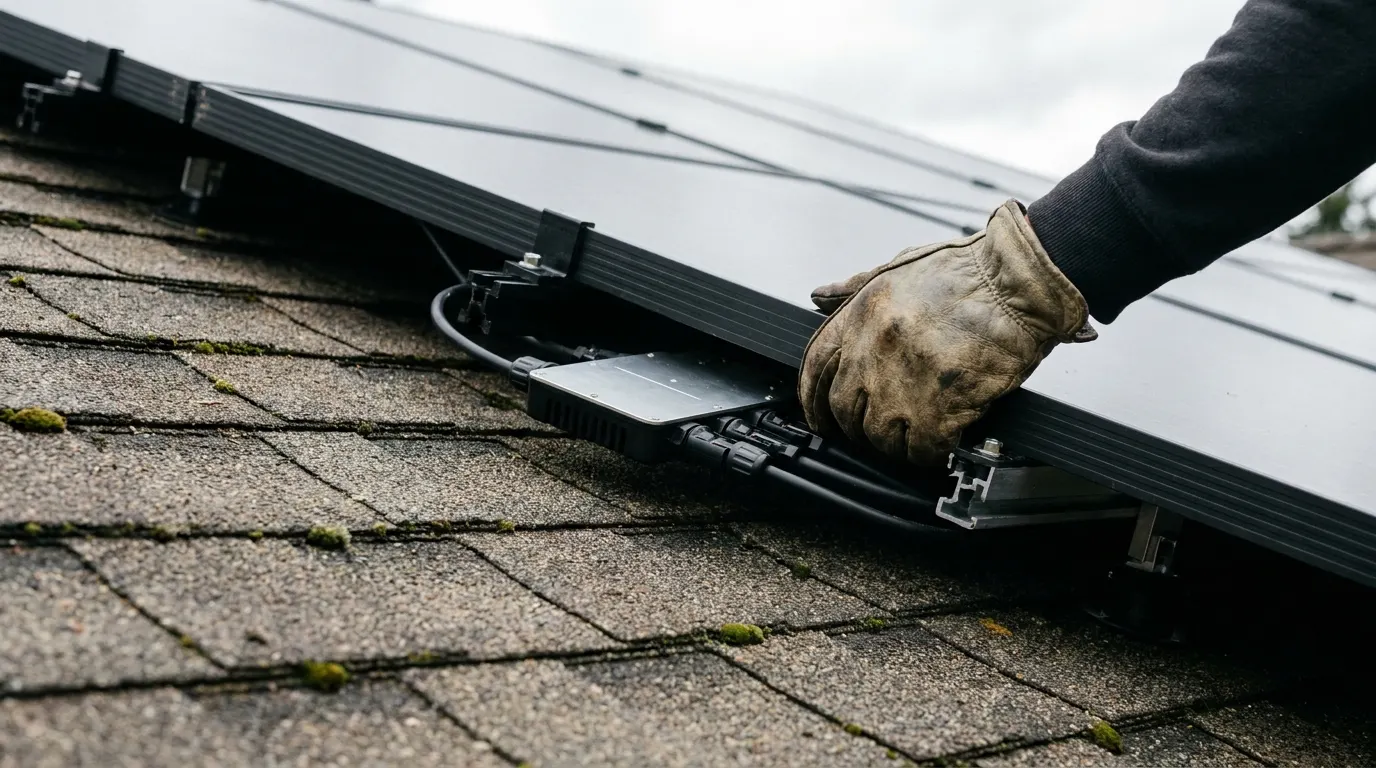
SunPower was one of the best-known names in American solar for almost 40 years. On August 5, 2024, SunPower Corporation filed for Chapter 11 bankruptcy and sold off its business. Two years later, many SunPower owners are still working out who to call when something breaks. This guide covers what changed and what still works.
What happened
- August 5, 2024: SunPower Corporation filed for Chapter 11 and started selling its assets (Utility Dive).
- September 20, 2024: the old company stopped supporting systems through the mySunPower app, the web portal and its 1-800-SUNPOWER line, according to the current SunPower’s acquisition FAQ.
- September 30, 2024: Complete Solaria closed its purchase of parts of the business, including the SunPower brand.
- 2025: Complete Solaria renamed itself SunPower. Same brand, different company: it sells new systems and doesn’t assume the old company’s warranties for systems installed before the sale.
How many systems it left behind
In the public installation records compiled by Lawrence Berkeley National Laboratory (Tracking the Sun), SunPower itself is listed as the installer of 102,364 home solar systems installed before its August 2024 bankruptcy, 91,685 of them in California, most installed between 2020 and 2023. (Later records under the SunPower name belong to the new company that bought the brand.) Systems sold through SunPower’s network of independent dealers are listed under those dealers, so the total number of SunPower-branded systems is much larger; reports put the number of affected customers in the hundreds of thousands.
The California cities with the most systems installed by SunPower itself include Menifee (2,972), San Jose (2,521), San Diego (2,338), Ontario (2,188), Victorville (1,723) and Fresno (1,613). Our California city pages list SunPower among the closed installers in each of those cities, along with the local companies still active.
Most of these systems were owned, not leased: only about one in five of SunPower’s own installations in the records were leases or PPAs. That means most SunPower owners have to deal with the manufacturers directly.
What SunPower systems look like
SunPower’s own installations in 2021–2023 were distinctive:
- Small and premium. The median system was 4.7 kW, against about 6.3 kW for California as a whole. Owners paid a median of $4.25 per watt, slightly above California’s $4.17.
- Mostly bought, not leased. About 18% were leases or PPAs; the rest were paid for in cash or with a loan.
- SunPower-branded panels and microinverters. Most systems used SunPower panels and SunPower-branded microinverters, which is why the warranty questions below come down to two manufacturers.
- Few batteries. Only about 6% included a battery.
Your panels: Maxeon
SunPower stopped making its own panels in 2020, when it spun off manufacturing into a separate company, Maxeon Solar Technologies. SunPower-branded panels (X-series, E-series, A-series, Maxeon) were made by Maxeon, and Maxeon said after the bankruptcy that it would provide warranty support for the panels it manufactured (Solar Power World).
What to do: find your panel model and serial numbers (on the back label, or in your original contract and system documents) and contact Maxeon’s warranty support. Maxeon asked owners to register their systems, so check its warranty site for the current process.
Your microinverters: Enphase
About two-thirds of SunPower’s own installations in the records list SunPower as the inverter maker. In most recent systems these are microinverters made by Enphase and branded SunPower, one under each panel. Enphase has said it is “fully committed to honoring warranties for our microinverters used in SunPower systems” (Enphase).
Older SunPower systems may use string inverters from other brands (SMA, for example), whose warranties come from those manufacturers.
Monitoring: the mySunPower app stopped working
SunPower systems reported production through SunPower’s own gateway (the PV Supervisor) and the mySunPower app, which the old company no longer supports. Your panels keep producing without it, but you lose the ability to spot a failed panel or inverter.
The main option is Enphase’s monitoring kit, which replaces the SunPower gateway with an Enphase IQ Gateway so the system reports to the Enphase app. An installer usually has to fit it. Ask local installers who work with Enphase for a price, and compare the cost with how much production you might lose if a failure goes unnoticed for months.
If you lease or pay a PPA
If you pay SunPower (or its financing arm) monthly for a lease or per kWh under a PPA, you don’t own the system. Those contracts were assets in the bankruptcy, and legacy SunPower leases and PPAs are serviced by SunStrong Management, according to SunPower’s customer information. SunStrong also took over servicing of Sunnova’s customers in 2025.
- Keep paying, and confirm in writing who you are paying.
- Ask SunStrong how repairs and roof work are handled under your contract.
- Check your production guarantee, if your contract has one, against the output shown on your bills.
Roof work on a SunPower system
The workmanship warranty that covered roof penetrations came from SunPower (or the dealer that installed your system), and SunPower’s is effectively gone. If you need a roof replacement or a leak repair under the panels:
- Check who actually installed your system. Many SunPower systems were installed by independent dealers that are still in business; their workmanship warranty may still apply.
- Hire a company that works on microinverter systems to remove and reinstall the array; most established installers do.
- Ask for a written warranty on the new roof penetrations, and make sure the company documents the system’s condition before removal.
Our guide to panel removal and reinstallation explains the process and what it costs.
Selling a home with a SunPower system
Buyers and their inspectors increasingly ask about solar systems whose installer is gone. To make a sale smoother:
- Owned system: gather the original contract, the permit and final inspection, panel and microinverter serial numbers, and the Maxeon and Enphase warranty documents. If monitoring is down, a year of utility bills showing solar credits helps show the system works.
- Leased or PPA system: contact SunStrong early. The buyer usually has to be approved to take over the contract, or you have to buy it out before closing, and both take time.
- Any system: consider a professional inspection of the array and roof penetrations before listing, so problems don’t surface during the buyer’s inspection.
A checklist for SunPower owners
- Find your contract, and check whether SunPower or an independent dealer installed the system.
- Write down the panel model and serial numbers, and the inverter type (label on the side of the house, or in your documents).
- For panel problems, contact Maxeon; for microinverter problems, Enphase.
- If you lease or pay a PPA, confirm your servicer is SunStrong and that your payments are going to the right place.
- Decide whether the Enphase monitoring kit is worth installing, so you can see failures again.
- For roof work, hire a company experienced with microinverter systems and get a written warranty on the new penetrations.
How to find someone to service it
Look for installers still active in your city that work with Enphase microinverters. On our city pages, each company in the ranking shows the inverter brand it uses most. When you call:
- Ask whether they service SunPower-branded Enphase microinverters and can file the Enphase warranty claim.
- Ask the price of a diagnostic visit and of the Enphase monitoring kit installed.
- For panel issues, ask whether they have filed Maxeon warranty claims before.
Part of a bigger pattern
SunPower is the largest of several home solar companies that failed in the past few years, along with Titan Solar, Sunnova, PosiGen and Freedom Forever. Together, the companies in our list of solar companies that went out of business installed more than 420,000 home systems in the public records. If you are shopping for solar now, favor installers with a long local track record and ask what happens to your warranty if the company is sold or closes.
Sources
- Utility Dive, SunPower bankruptcy and sale to Complete Solaria, 2024.
- SunPower, acquisition announcement and FAQ.
- Solar Power World, Maxeon will offer warranty support to SunPower panels, August 2024.
- Enphase Energy, Enphase Energy assists SunPower customers with monitoring and service solutions, April 2025.
- Lawrence Berkeley National Laboratory, Tracking the Sun, 2026 edition, records through 2025. Counts by Solar Power Fix.
Frequently Asked Questions
Is SunPower still in business?
The original SunPower Corporation filed for Chapter 11 on August 5, 2024 and sold its assets. Complete Solaria bought parts of the business in a deal that closed on September 30, 2024 and renamed itself SunPower in 2025, but it is a different company and doesn't take on the old company's obligations to customers whose systems were installed before then.
Who honors my SunPower panel warranty?
Maxeon Solar Technologies, which manufactured SunPower-branded panels, said it would provide warranty support for the panels it made. Contact Maxeon's warranty team with your system details and serial numbers.
Who covers SunPower microinverters?
Most SunPower systems use microinverters made by Enphase and branded SunPower. Enphase said it is fully committed to honoring warranties for its microinverters used in SunPower systems, and it sells a monitoring kit to move those systems to the Enphase app.
I lease my SunPower system. Who do I call?
Legacy SunPower leases and PPAs are serviced by SunStrong Management, according to SunPower's customer information. Keep making your payments and contact SunStrong for repairs and billing.